Social Sustainability in the US and Sicily
Sustainability is a big buzzword in the wine industry. But social sustainability may be the true path forward.

Last updated on March 3rd, 2025
Sustainability is one of those buzzwords that lives and breathes everywhere these days. In the wine industry, we see more and more wineries making public commitments to sustainable practices, table talk in restaurants has even shifted to include questions about organics and biodynamics. Sustainability is now in the zeitgeist.
Most of the discourse around it, however, has arguably been centered on what happens in the vineyards and with farming. But there’s a big piece that’s missing in these conversations that no movement can survive without. And that’s the social aspect of sustainability. In other words, what’s the glue that binds these practices? What structures are being established, socially, to share knowledge, resources, and activate communities?
We see grassroots organizations like Anything But Vinifera (ABV) in the states, and the Sicilian Biodiversity and Viticulural Project ( BiViSi) in Sicily modeling what social sustainability looks like in practice, and how this can lead to cultural shifts and changes in how we engage in business overall. These examples demonstrate how capital “C” change takes place by creating activated communities rooted in mutual aid.
Social Sustainability in Nature: Mycelium Networks
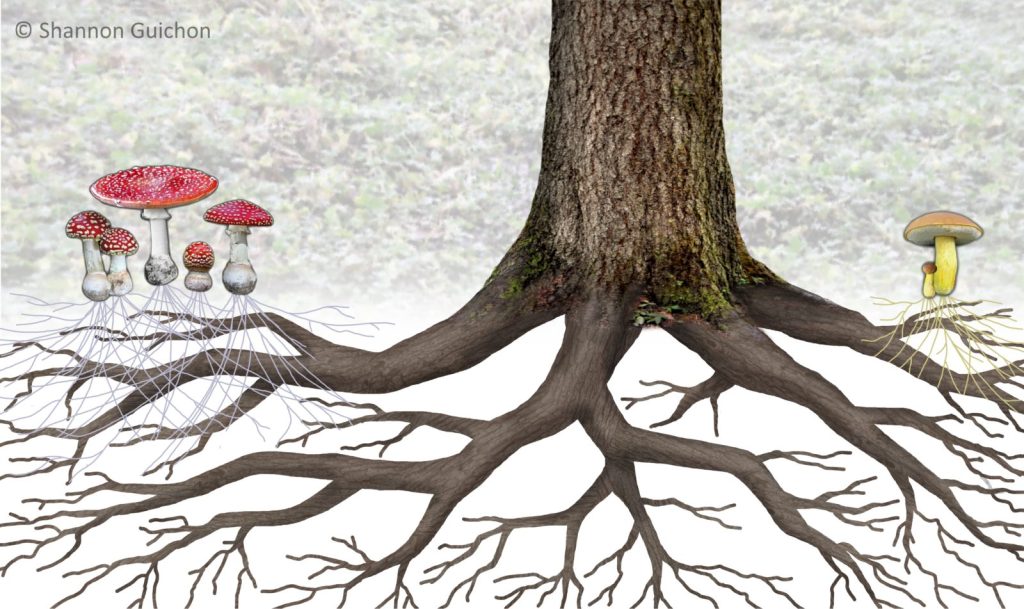
Picture it-you’re a mushroom, right? Just minding your own little mushroom business in a forest. What we see of you above ground is truly just the tip of the iceberg. Underneath the surface, is a vast network of little fibers that wrap around root systems of trees. This “network” connects individual plants and trees together to transfer water, nitrogen, carbon, and other minerals.
In other words, trees communicate and share resources through mycelium networks. They sustain each other, ultimately creating an offering that shifts the entire world around them. These complex, complicated systems exist from all of these natural organisms opting in and playing their part.
Are you still with us? Ok! Let’s look a little closer at two examples of social sustainability that mirror the communication happening in a mycelium network.
The BiViSi Project’s efforts in Social Sustainability
The Bi.Vi.Si. project was created to enhance and preserve Sicilian biodiversity and viticulture. It’s a massive operation, primarily centered in Sicily, but with reach all the way to Milan, centered on preserving, systematizing, and ultimately invigorating ancient grape varietals. Sustainability is at the forefront of the mission, not only environmentally but there’s also an intentional focus on maintaining the health and vitality of the local wine industry, and all the players connected to it.
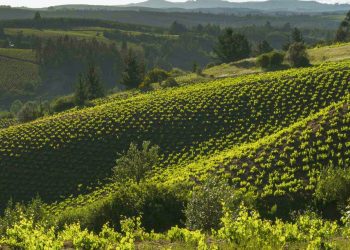
The conservation efforts of indigenous varietals and ‘ancient relic’ varietals, as the BiViSi team calls them, are quite expansive. They’re planting every single grape varietal, on every soil type present on the island, in a myriad of climate conditions, to understand optimal growing environments for these grapes to thrive. Extensive and meticulous, yes, but according to BiViSi, climate change is shifting Sicily so much that within 50 years, nothing will look the same and nothing will be able to grow as it does now. Their mission is crucial to continuing the lineage of foodways, industries, and culture.
So how does this all work? The project engages with five different agricultural businesses from all over the island, a massive nursery in Marsala, educators from universities in Palermo and Milan, and of course winemakers. This is a community in action. Everyone plays their part for the betterment of the collective. Researchers do research. Farmers plant. Educators summarize findings and disseminate information. No one part of this operation is more valued than the other. Bi.Vi.Si connects across lines of industry, highlighting a way of coalition building with one mission in mind: survival. Yes, environmental conservation is the root of the cause, but by proxy of working together, they’re modeling how relationships and combining resources are integral elements of sustainability.
Social Sustainability in the US: ABV Ferments
These community and conservation efforts, specifically around indigenous grapes, mirror the work being done in the US with hybrid grapes by ABV Ferments (Anything But Vinifera) a collective founded by Jahdé Marley in New York City. ABV is a non-profit events and education platform, and traveling wine summit where artisans, land stewards, and local communities gather to share resources around hybrid grapes, native agriculture, regional fruit, and solidarity economics.
Working in a similar “mycelium network” style, Marley has assembled some of the most innovative, dynamic, and progressive minds in the wine world to be a part of ABV’s community. Rooted in the principles of sharing knowledge and resources, this squad has reinvented what the wine space can look and feel like, amplifying the potential of hybrid grapes, and giving voice to women and POC in the wine world.
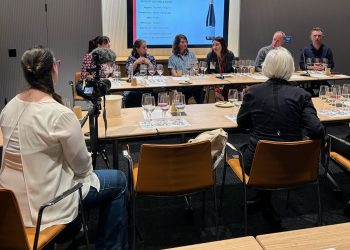
One of the most noteworthy things about ABV is that it focuses on social sustainability through community. It’s of the people, for the people, by the people. Counter cultural in its ideology, ABV centers collaborative structures and co-creation. If you attend one of their wine summits, you see an event functioning like no other. The educational seminars highlight ancestral fermentation techniques with a focus on sharing resources. The food being served is from cultures of the global majority (for example, Trinidadian doubles served as the snack du jour at a recent summit.) The panels are often rooted in questioning the status quo in ways that benefit the collective, like discussing solidarity economics and reimagining financial structures of companies.
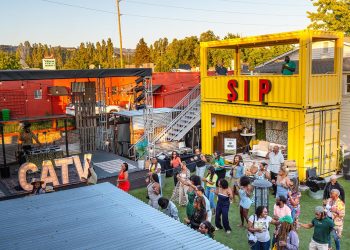
The tastings are a joyful sea of people, bopping around and making new friends, sharing notes and excitedly directing others to their favorite stations to taste. It’s a really special place. Everything about ABV is an antidote to mainstream ideology and business practices, often laden with exclusion, extraction, and exploitation. The communication taking place in these mycelium fibers is tantamount to revolution.
ABV’s Use of Hybrid Grapes
Hybrid grapes are a valuable tool for ABV and its mission. Hybrid grapes are the crossing of two or more vitis (grape vine) species. The most common crossing is vitis vinifera (primarily European grape varietals) and grapes that are native to North America such as vitis lambrusco.
It’s like if your mother came from France, but your father is from Virginia. You were born and now you’re an American with ancestry from two different countries. Hybrids are giving American wine an identity and sense of place that it arguably has never had before. American wine identity has been shaped and defined by the planting of international varietals since the inception of the wine industry. This is especially important at a time where sustainability is critical to the industry’s survival. Hybrids are particularly sturdy and disease-resistant. Enter ABV.
ABV is the first wine summit of its kind that elevates hybrid grapes. These summits create more entry points into this industry for people of diverse backgrounds. From tasting opportunities, to providing platforms for women, POC, and queer producers to share their work, this community is showing what is possible when we share knowledge as a community and utilize natural resources (i.e.-fruit that is naturally occurring in the US.)
What’s possible if we question assumptions and common, long-held practices in this industry? What if we use grapes and fruits that are from here to ferment? Can we question the idea that American grapes aren’t as good as international grapes? What could that do for an industry? For a cultural identity that is still being formed? The implications are vast and promising. To tie this all together, hybrids are creating new pathways for the face of the industry to evolve, for new standards of farming and business, as well as broadening perspectives of what constitutes as a well made wine. One could argue that a critical component of social sustainability is building a strong sense of cultural identity. Summits like ABV’s are the marketplace where cultural identity forms; it’s a hub for dissemination of knowledge, strategy, and resources. This is social sustainability in the truest sense of the idea.
So what do these examples tell us about the social aspect of sustainability? Community minded efforts are necessary for lasting, sustainable change. Progress doesn’t happen in a silo. Individuals do not maintain culture, but rather collectives of people all supporting one idea. As we approach bigger questions, like sustainability, and tackle bigger problems like climate change, we can look at the examples of these ‘mycelium networks’ as models of how to do so.

Related Posts