Meaghan Odum’s Journey is a Breast Cancer Awareness Month Testimony
Breast Cancer Awareness Month isn’t all pink ribbons and cancer walks. For people like Meaghan, it’s so much more.

Last updated on March 3rd, 2025
As we wrap up Breast Cancer Awareness Month, it’s important to remember that the month was not just for pink ribbons and donations to health organizations. In fact, when that happens, many are accused of “pinkwashing”, or using the month for marketing promotion instead of addressing the real issues. Breast cancer is a serious disease, impacting real humans and can change the course of their lives forever.
Influencer and sommelier Meaghan Odum learned this lesson all too well. Meaghan learned of her diagnosis earlier this year and has spent several months with a new outlook on life. Her journey is a case study in how to navigate the disease. However, it’s also a cautionary tale for those with loved ones who are, or will be, impacted by cancer.
The History of Breast Cancer Awareness Month
Breast Cancer Awareness Month is as much a fundraising month as it is an awareness month. In 1985, the American Cancer Society partnered with the pharmaceutical division of Imperial Chemical Industries (now a part of AstraZeneca) to start the month. The initial goal was to promote the use of mammograms (a test to detect breast cancer via x-ray imaging) as a way to diagnose the disease early.
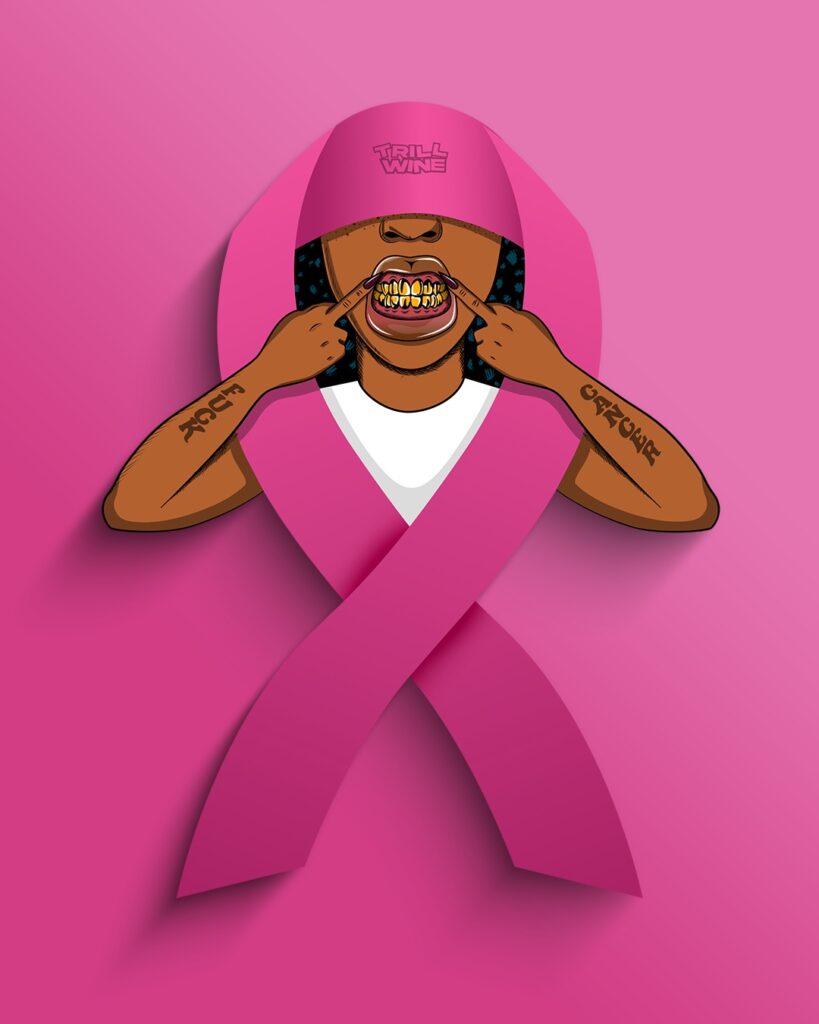
The idea of a pink ribbon started when 68-year-old Charlotte Haley made peach-colored ribbons to draw attention to a lack of funding for the disease. This caught on when the Susan G. Komen Foundation began using pink ribbons along with companies like Estee Lauder and Avon.
Since then, companies all over the country use pink and ribbons to commemorate the month. Companies change their product packaging, the White House adds pink lighting to the building, and the NFL has its players wearing pink accents to their uniforms.
However, critics have grown concerned that companies are “pinkwashing” by changing their packaging and claiming to care about the disease, but do very little to address the issue.
However, Meaghan had a few important members of her community that were ready for action to support her, including her care team, family and the drinks community.
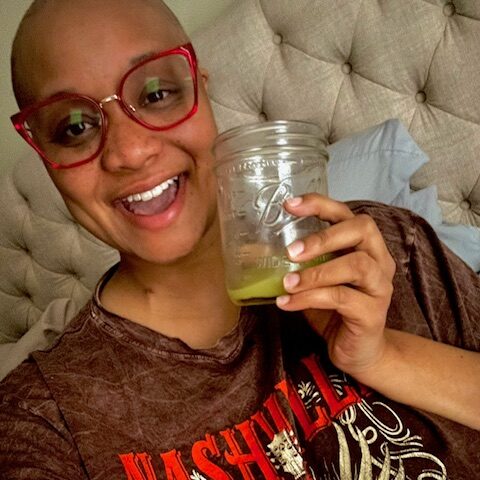
Meaghan’s Journey
Meaghan first noticed a lump in late February, a few months after recovering from a hysterectomy. She had a doctor take a look at it, who agreed to do an ultrasound. During the ultrasound, she could sense the look of concern on the doctors faces, who scheduled a biopsy shortly after.
Unfortunately, as time and tests went on, her cancer grew to the point that surgery could not be done immediately, she would have to go through chemotherapy first. Meaghan, who is a doctoral student in Healthcare Administration, learned that she had a rare inflammatory breast cancer. It only accounts for 1 to 5 percent of breast cancers, though it is more common in young (premenopausal) black women, like Meaghan.
After the initial biopsy, Meaghan consulted doctors she had a relationship with who gave her a referral to an oncologist locally who then scheduled the mammogram and PET Scan (another imaging test which can detect the existence and spread of cancer).
The next week was a whirlwind that included eight biopsies, inserting a chemo port (which allows doctors to draw blood and give treatment without frequent needle sticks), getting an EKG and starting chemo. Chemotherapy is where doctors administer drugs to try and kill cancer cells. Meaghan’s treatment used a drug called Adriamycin, also known as “the red devil” because of its color and severe side effects. Meaghan called it “the blood of Jesus” instead. After the eight rounds were completed, Meaghan opted for a double mastectomy, which removes both breasts.
Meaghan credits her new care team for being supportive and caring. She is completing several rounds of radiation treatment, which is due to complete in late November.
Support from Mississippi Hospitality
For years, Meaghan has been a fixture in the wine and drinks community. Her Instagram page, @TrillWineWife boasts more than 10,000 followers. Her page is full of informational, authentic (“Trill”) content that makes wine more accessible and interesting for her followers.
It’s no surprise, then, that her community supported her with her own drink. The Manship is a restaurant based in Jackson, Mississippi where Meaghan is based. Tiffany Bobbs is a friend of Meaghan’s and the general manager and sommelier for the restaurant. She developed The Trill Renegade, a sangria-style cocktail made with local vodka. Sarah-Fey Brown is another friend, Sommelier and distributor at International Wines who donated products for the cocktail. The Proceeds from the sale of the drink go to Making Strides Against Breast Cancer of Central Mississippi.
“Our restaurant always gives back to the Making Strides Against Breast Cancer movement in Jackson, MS. I knew this year that I wanted to honor a woman who fought this terrible disease with a resilience and beauty that I had never seen before. Meaghan has been a huge champion for our restaurant and the entire Mississippi hospitality industry,” said Bobbs. “I knew her tenacious spirit could not be contained, even by something as scary as cancer. From day one her attitude and strength have shown through her battle.”

Community Support
Her husband, known on Instagram as “Coach O.”, also stepped up to the plate and became everything Meaghan needed to navigate this new journey.
“My husband was very supportive, very loving, he anticipated my needs. He went from husband to superman,” Meaghan recounted. “He really stepped up, took care of me and the kids. I now understand the purpose of ‘for better or for worse, in sickness and in health’, he exemplified that so well. He did an amazing job helping me get through this.”
Her entire family, and the state have been supporting Meaghan through this journey. It’s a perfect example of “it takes a village”.
“I would like to acknowledge the unwavering support of my daughter, Alivia, and my son, Allen O. III (Trey), along with the incredible encouragement of close family and friends, both near and far,” she said. “I am also deeply grateful to the Mississippi Delegation and the cherished Instagram followers who have become friends as I shared my journey.”
It’s been an honor to tell this story for a dear friend. It’s truly inspiring to see Meaghan take this challenge on and keep her positive, “trill” spirit with her.
How to talk to someone with Breast Cancer
One of the challenges when supporting loved ones impacted by breast cancer is knowing what to say. It’s very sad news, maybe the only connection some may have to a cancer diagnosis is a family member passing away. However, this is the worst connection you can draw for someone going through it.
“I couldn’t talk about it, because a lot of people don’t know how to respond. They talk about other people who have died from it, or even crying so now you’re helping them feel better about your situation,” said Odum. “Instead, when someone tells you something like this, listen to them to understand and be positive in your response. They need hope and support. Send meals, where pink, come sit with them. They may not have the energy to come to you and hang out.”
What’s next for Meaghan
Meaghan has always created a space to be authentic, for herself and others. She already has plans in the works to continue that.
“I want to add breast cancer survivorship as a part of what we’re doing, and let people feel comfortable, knowing they have someone just like them,” said Odum. “It shows I’m human. I’m not some big time influencer, things can happen to me too. I have a couple of scars and bruises but I’ve healed and you can do this too.”
Meaghan is having conversations with other women who have experienced this about developing a community for people to be able to express how they feel and what they’ve gone through. Be sure to follow Meaghan at @TrillWineWife on Instagram to learn more about what she has coming up. You can also follow her breast cancer journey on TikTok @megzmilli.
Breast Cancer Awareness Month Resources
October doesn’t have to be the last time to think about breast cancer. Learning about the disease and how it impacts loved ones is an important first step. The American Cancer Society continues to provide resources and information on breast cancer and testing. Most importantly, encourage others to get tested early and often. Women should get mammograms as early as 40 and should get them every two years. However, family history and other risk factors may make testing early necessary. Consult a doctor for more information.

Related Posts