Unlocking Global Potential in the Wine Industry
When it comes to the wine industry, black professionals - in the US and South Africa are finding that there is a crossover. If the industry has similar hurdles across continents, surely there are opportunities to learn from one another?

Last updated on February 18th, 2025
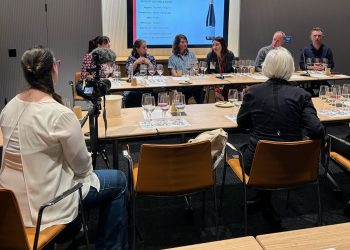
Earlier this year, South Africa Wine, in collaboration with the Craig School of Business at Fresno State University and the Association of African American Vintners, hosted a panel discussion. To bridge the gap between Black wine entrepreneurs and professionals of color, two thought leaders from the U.S. were invited to the Wine Arc in Stellenbosch, South Africa, to engage in a multifaceted and multidisciplinary discussion about the South African wine industry and similarities in the U.S.
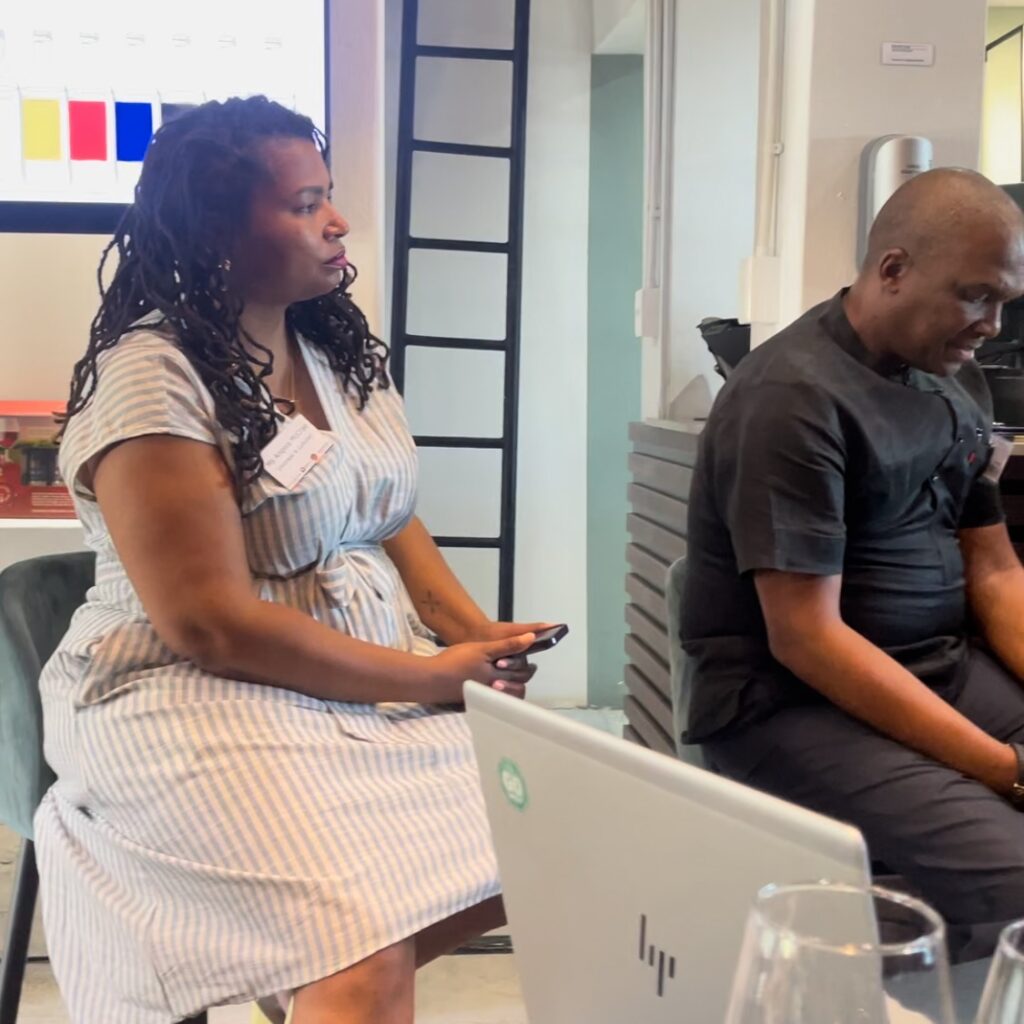
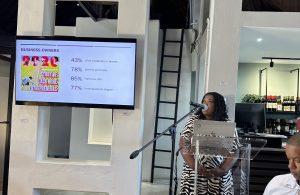
Forming part of a panel: Craig School of Business professor Dr Monique Bell, Executive Director of the Association of African American Vintners Angela McCrae, Wines of South Africa rep Matome Mbatha, President of South Africa’s Sommelier Association, Spencer Fondaumiere, and South African wine entrepreneur Malcolm Green. These “friends of the vine,” as panel facilitator Ivor Price affectionately referred to them, conducted a kind of SWOT analysis of the industry and engaged the attending wine professionals in the discussion. The theme of the engaging panel discussion was “Unlocking Transcontinental Insights,” with a goal to delve into the various facets of Black wine entrepreneurship and consumer dynamics in the United States and South Africa.
It seems that while the wine industry sees customer activism in America, the same intentional move towards a more inclusive industry is not happening in Africa. For more than twenty years, South Africa has had a rule similar to affirmative action known as Broad-based Black Empowerment, requiring a certain percentage of people of color within companies. However, within one moment in the US, there was a bigger commitment to inclusion than we are seeing in South Africa.
“I’m sorry to say, but it feels like we’ve hit our ceiling in South African wine, which is why a lot of us are looking to America for opportunities,” Denise Stubbs of Thokozani Wines remarked during the discussion.
How can this be?
South African Wine Demographics
South Africa ranks in the top ten wine-producing nations of the world. However, when you look at the percentage of landowners within this booming industry, it in no way reflects the demographic of the country where 81.4% are Black, 7.3% White, 8.2% Coloured (of Cape Malay descent), and 2.7% of Asian descent. In fact, there is only one Black wine farm in the country.
That said, you might be served by a slew of bartenders of color, and even have a few bottles suggested by Black sommeliers. Compare this to the 67 black-owned wineries in the States, as per Dr Bell’s statistics, where Black people make up 12.4% of the population.
Even though Africans don’t own the land, a handful of black winemakers own their labels, some might remark. This isn’t enough to solve the equity problem.
This covers one of the many touch points discussed during the panel discussion:
Land Ownership, Visibility, and Distribution
At the moment, South African wine professionals of color rely on collaborations with various stakeholders. “There are opportunities to partner with hotel groups,” Malcolm Green begins, “reach out to retailers, knock on doors yourselves,” the owner of La Ricmal wine insists.
Land security has the potential to influence the value chain, making the route to market more accessible. Using distributors, for example, is easier when you consider the capital saved from owning the land and infrastructure of your product rather than purchasing them at fluctuating prices.
Furthermore, it becomes difficult to compete with legacy brands with the privilege of generations of notoriety in the industry. Restaurants might default to brands they are familiar with as opposed to taking a chance on newer labels. This is where, as Spencer puts it, consumers play an invaluable role. “I think it’s important that we request the wines we want to see on the shelves. It can’t simply be up to the winemakers and ambassadors; consumers also have a part to play in changing the landscape of the industry,” Spencer remarks.
US Similarities
This has proven effective in the US, as Angela recounts an instance where she frequently went to a wine shop asking for a specific wine – which was Black-owned. The owner didn’t stock it. She’d say “okay” and leave, only to return after a week and ask for the same wine. Eventually the owner sought out the wine and stocked it. If Africans hope to see diversity in the cellars, there needs to be a similar tenacity.
“The black community, in Africa at least, doesn’t really have a culture of wine in the way our European peers do,” Spencer began, “and in a lot of instances, many of our parents don’t fully accept that we drink,” he joked. This raises the issue of Cultural Relevance, which was acknowledged during the afternoon.
A great number of wine professionals of color get into the industry as laborers and nothing else. At the same time, many workers enter the industry with minimal background and then struggle to catch up.
South African Wine Service
“As a somm, you wake up in the morning, you put on a nice suit, and get to present wines with an extensive history and provenance which you’ve studied. Then you go home to a township, which is an environment that is completely different,” Spencer explains. Consider a Malawian sommelier who is tasting a Chenin Blanc hailing from the Swartland region of South Africa. The wine is described as having quince notes which the somm might have never tasted before. Instead, he picks up on marula fruit flavors because that is what he grew up eating. What are the chances that he will be relegated purely based on the misalignment of his knowledge?
“There is no difference between black wine and white wine,” Malcolm Green accurately remarks. Therefore, there needs to be a more compassionate approach to making wine accessible to our various cultures. When we explain wine in a way that both producers and consumers can relate to, everyone wins.
“Some of us are in this industry because it has to work,” Malcolm Green insists. Whether it be through generations of grape picking and bottling or simply entering the hospitality industry because of the lack of employment opportunities, many Africans find themselves working in wine. There are low-to-mid-level positions that people of color work in. Only a handful of lucky professionals manage to break through and establish their own brands. However, for the majority, poor training and gatekeeping stunt their professional growth. This is an ongoing problem within the local industry that continues to concern professionals. The solution wasn’t simple enough to resolve during the panel discussion.
Conclusion
When the vine calls, there are a select few who answer. Carving out space for black and brown wine professionals isn’t an easy undertaking. The solution lies in addressing the idiosyncrasies that come with producing and consuming wine. Things like empowering sommeliers to describe wines in culturally relevant ways, broadening the spectrum of the already colorful industry. Producers and consumers alike need to answer a set of ubiquitous demands. Namely, how can we create equal opportunities for all ambitious wine professionals?.
When we coalesce on what has been successful, opportunities for collective problem-solving are possible. More collaborations like this panel and other experiences should happen between US black wine professionals and South African wine professionals. We can learn from each other and build our respective places in the industry.

Related Posts