Experience the History and Culture of Sicily Wine Country
Sicily is retelling its wine story through its oldest grapes.

Last updated on April 6th, 2025
If you want to talk about a melting pot, take off this lid and have a look at Sicily. It is the largest island in the Mediterranean. Sicily’s position between Europe and North Africa made it one of the most significant crossroads of trade and cultural exchange. The result of all of this exchange is a rich tapestry of interwoven cultures that gave birth to something new all to its own. A stunningly beautiful island, Sicily’s history and landscape is the embodiment of contrast.
Traversing into Palermo from a nearby airport, there is a a wall of cascading mountains on one side, and sea on the other. A short car ride will take you through some of the most green, fertile hillsides covered in olive trees and grape vines. You quickly end up in an area seemingly out of a Tim Burton movie, like Beetlejuice or Sleepy Hollow, surrounded by clouds and black, gravelly stone as far as the eye can see, underneath the shadow of one of the oldest, active volcanoes in the world. It’s ancient yet modern, cosmopolitan yet deeply rural and agrarian. Sicily is a beautiful creolization. Considering Sicilian cultural identity is the sum of its parts, how does one even begin to wrap their mind around defining what it means to be Sicilian? What are the components? What are the signposts of culture?
On a recent trip to the island, these questions took center stage as we took a deep dive into the wine and culinary traditions of Sicily. Winemakers like Sebastiano da Silva of da Silva Wines in Palermo, and the Caruso sisters at Caruso e Minini winery in Marsala pose their own answers to these questions. These winemakers generously wined and dined us. But most importantly talked to us about how indigenous grapes play a vital role in telling the history of Sicily. These grapes act as symbols of a reclaimed cultural erasure, and tools to carve out Sicily’s future in the wine industry.
Sicily Rewriting its History
Since the 90’s, Sicilian winemakers have been on a journey of rewriting their story. Around that time, the industry at large shifted in its tastes and palates towards “New World” wines, and international varietals like Cabernet Sauvignon and Chardonnay. The Sicilian wine industry took a hit as that desire shifted attention away from their grapes. As a response-and to try to stay in the game-Sicilian winemakers began to uproot their indigenous grapes to plant international varietals. Not only was this a cultural shift, the EU began to offer incentives and subsidies for planting international grapes. This massive effort to “modernize” the industry, decimated indigenous crops and along with it, an agricultural identity.
Fast forward to today, it’s almost like the world of winemaking went from black and white to technicolor as producers are waking back up to the brilliance of indigenous grapes. There was a massive shift in attitude towards reclamation of cultural identity and replanting of relic varietals that were once uprooted. Nature played a huge part in this indigenous renaissance. With the increasing impact of global warming, international varietals planted on Sicily weren’t adapting as well to the changes in climate. The answer? Identifying grapes and other crops that were thriving despite the evolution of conditions. It just so happened that the most resilient and primed grapes were the indigenous ones.
Exploring Sicily Wine
Armed with a sense of clarity and pride, producers like Sebastiano di Bella of di Bella wines, and Giovanna and Rosanna Caruso from Caruso e Minini, are carrying the torch to introduce the Sicily to the world. They’re challenging the associations long held about Sicilian indigenous grapes only being good for bulk sales and blending. They contend that their unique sites and flavors can compete with the most renowned regions in the world. They’re showing us what is possible when you lean into your uniqueness, dare to do business differently, and have a mission to carry your culture forward.
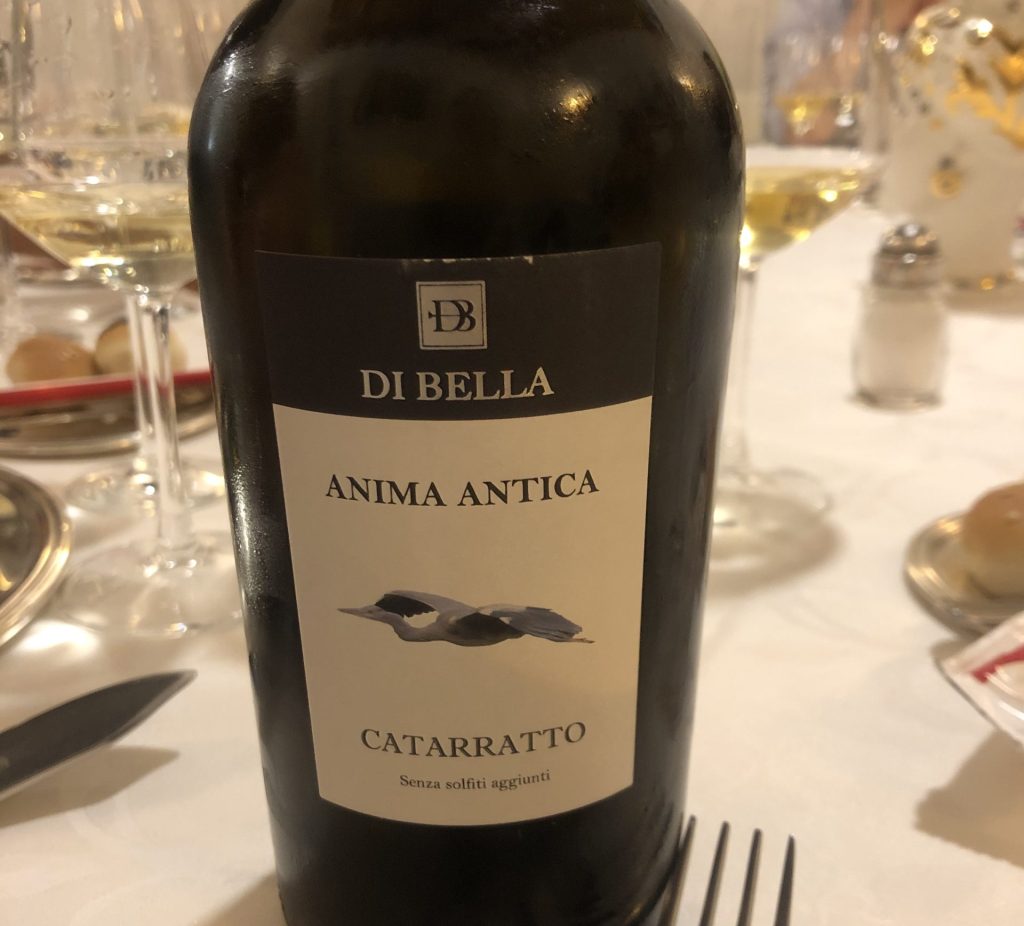
Di Bella Wines is an urban winery in the bustling capital city of Palermo that highlights the ancient grape Catarratto. The city and the grape tell a very similar story. Palermo has this beautiful visual tension that clearly illustrates that aforementioned dance between the ancient and the modern. Streets made with massive limestone slabs of a bygone era are lined with modern shops like Sephora and H&M, overlooked by palaces built in the 9th century. It’s a stunning juxtaposition and a constant reminder of heritage colliding with global influences. That tension was ever present in conversations about Catarratto and Sicilian history with Sebastiano di Bella.
Sicily Wine Indigenous Grapes: Catarrato
Catarratto has this fascinating background. According to Sebastiano, it’s the only grape in every Sicilian province and the oldest indigenous grape on the island. This white grape is a stunner! Incredibly fresh and vibrant, the nose leans into citrus and tropical aromas with hints of honey and wildflowers in the background. The palate gives similar characteristics, with a bright, electric acidity making it perfect with seafood driven, Sicilian cuisine. As we sipped through a line-up that showcased Catarratto in its full glory, ranging from a fresh, vibrant ‘23 vintage to a complex, aged, skin contact iteration, Sebastiano walked us down a winding road of how Catarratto is Sicily (in his own words.)
In Sebastiano’s estimation, Catarratto is the most important grape on the island. Despite once being the most widely planted varietal in Sicily, it was among the most decimated for the sake of the international grapes. We discussed at length the legacy and harm of culturally ingrained ideas that international-mainly French-wine and grapes were the staple to strive for. Most notable from Sebastiano was the cultural impact of these notions. When Indigenous grapes were uprooted to plant international varieties that became popular in Western markets, the pivot left behind a belief that Sicilian varietals weren’t high-quality and that winemakers couldn’t make money using indigenous grapes. In other words, there was a shunning of self and identity.
Winemaking for Heritage
What we see now with Sicilian winemakers is a return to the indigenous and valuing history and heritage; a deep desire to establish a widespread cultural identity, and rebrand indigenous Sicilian grapes for their brilliance.
We were talking about grapes, but underneath that, we were talking about identifying the value inherent in one’s own culture. There’s this intense hunger Sebastiano has to rewrite the story about his island. He was one of the many people we spoke to who made it clear that Sicilians have something to prove, not from a place of lacking value but instead from a place of rediscovering immanent value. To Sebastiano, to be Sicilian is to be connected to the land, acknowledge indigenous culture, and champion their heritage.
Leaning into Heritage and Culture
The tagline for Caruso e Minini Winery is “Let’s Make Our Land Travel,” highlighting an honoring of the land, amplifying the culture, and reintroducing their grapes with intention. Under the guidance of Giovanna and Rosanna Caruso, this family-run operation in Marsala showcases what it means to approach winemaking from a place of stewardship, community care, and hospitality.
A critical component of the Caruso sisters’ mission is re-establishing and challenging what wine from Marsala can look and taste like. Historically, the Marsala region focused on fortified wines often used in cooking. These two are showing the breadth and depth of what else Marsala has to offer. After a tour of the winery in a gorgeous baglio-a Sicilian estate with a large courtyard- constructed in 1904, we tasted through a lineup of their stunning wines.
Their Grillos and Catarrators evoke grand cru Chablis. Both were a flurry of minerality, salinity, wild Italian herbs, honeyed notes, and bright citrus. The reds ranging from Frappato to Nerello Mascalese and Nero d’Avola were a romantic, sultry dance of violets, florals, red fruits and berries, with an undeniable vivaciousness. Giovanna and Rosanna are making magic happen. All the wines had an incredible complexity and flavor combinations that were unique to this place. When we landed on the Perricone – a rare, minty, herbaceous, dark-fruited gem – the implications of uprooting culture became much more vivid.
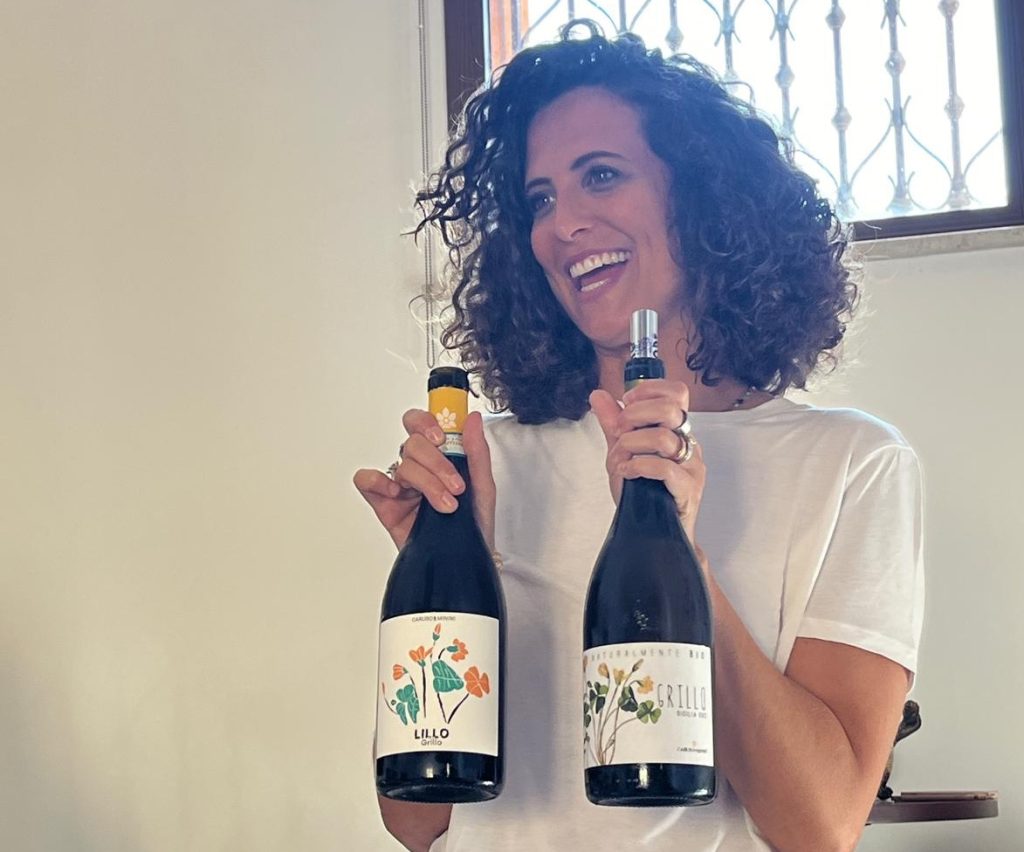 Giovanna Caruso
Sicily Wine Indigenous Grapes: Perricone
According to Giovanna, only 300 hectares of Perricone are planted on the island compared to 15k of Nero d’Avola. This gives a sense of scale behind the decimation of indigenous grapes and the industry shift that took place. Luckily, Giovanna’s grandfather kept 5 hectares. According to the sisters, “This grape is really special and something unique. You can’t compare it to anything else.” As Giovanna and Rosanna talked more about Perricone, it became clear that something this special was almost wholly lost. And furthermore, it was almost lost for the sake and tastes of people that aren’t even of the culture.
As you begin to understand more about these grapes, you learn that they are a vehicle for telling the story of the people. Giovanna and Rosanna shepherd that story, which is just as nuanced and dynamic as their wines. By “making their land travel,” they’re taking their power back and breathing life into a history almost lost. “When you talk about wine, you’re actually talking about the people, the land, and the culture,” says Giovanna. In stressing the importance of introducing these indigenous grapes, the Carusos are ushering the culture forward.
The Future Generation of Sicily Wine
They’ve even created a cooperative called “Next Generation” to pool resources and knowledge together in support of moving the needle. The sisters said, “We just established a new group called ‘Next Generation,’ which consists of all of the producers under 40 who work actively in wineries, young folks in marketing, wine tourism, etc. Everybody can bring their energy, knowledge, and expertise to this. This is our force. This is our best way to communicate Sicily to the consumer.”
The chapter that Next Generation is authoring about Sicily is one rooted in community care, organizing, and realizing their collective strength is intrinsically tied to each other’s well-being.
Sebastiano di Bella and The Caruso sisters expressed a desire to proclaim their narrative, and correct the missteps of generations past. There are questions emerging underneath all of this work like: who do we allow to determine our value? How can we question that rubric-particularly when its ideas and beliefs are rooted in exclusion? What’s possible when we counteract ideology that devalues self, culture, and identity markers? These are big questions that certainly don’t have fast, simple answers. These winemakers, however, are being courageous enough to dance with the questions. Leaning into community organizing, sharing resources, and self definition is pushing them closer to sustainable solutions.
A Reflection on Sicily Wine and Culture
Leaving Sicily, one couldn’t help but to think of the cost of assimilation. Granted, no one we spoke with during our travels named it as such. But it is evident that there was a hyper focus on survival by acclimating to the rules of an existing system. The options these people were given were to uproot their grapes-and their culture-or perish, essentially. This example of Sicily illustrates that no one wins in cultural erasure. As we in the US approach an administration hell bent on deportations and myopic world views, perhaps this history can teach us the beauty and potential of acknowledging inherent value and cultural diversity.

Related Posts