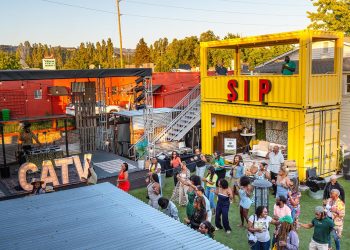
Sunshine Foss Is Pouring Into the Future
How the founder of Happy Cork built a 31-state wine club, earned a national TV spotlight, and is now taking her expertise into the cannabis frontier, all rooted in community.

Last updated on March 26th, 2026
The Room Remembers Her Name
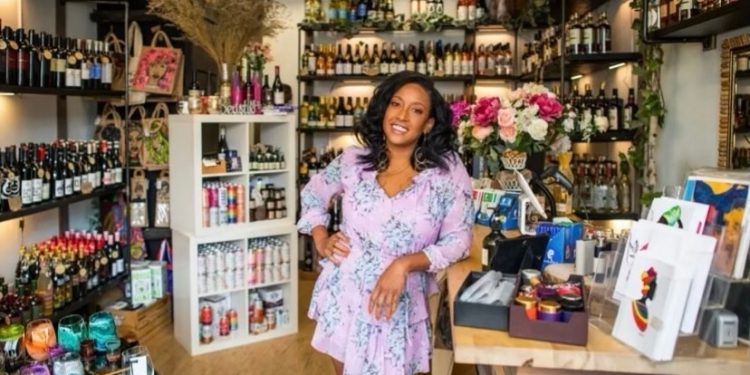
It’s a Saturday afternoon in Brooklyn, and the energy inside Happy Cork is the kind you’ve been chasing all week. The shelves are stocked with labels you won’t find at a chain store — small-production bottles from founders who look like your neighbors, your cousins, your aunt who made that pivot. The music is right. The lighting is warm. And somewhere between the tasting notes and the laughter, you realize: this isn’t just a wine shop. This is a room someone built with intention.
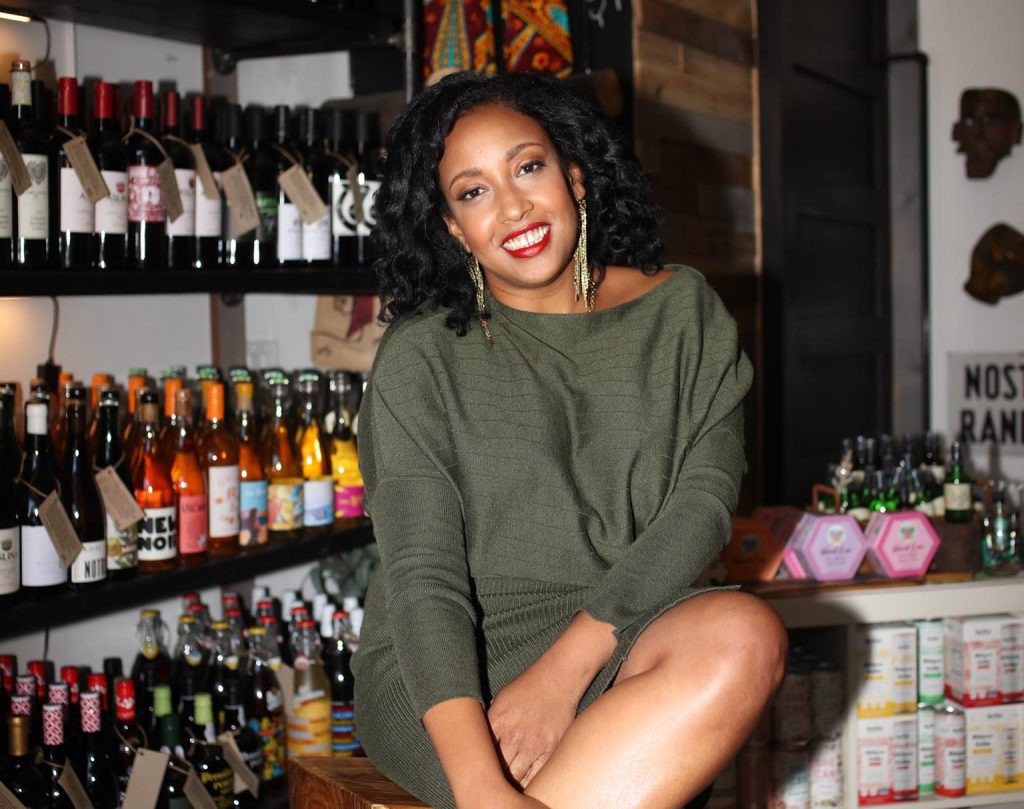
That someone is Sunshine Foss.
Foss is the founder of Happy Cork, a Brooklyn-based wine and spirits boutique with a mission that’s as clear as a well-pulled cork: create a space where Black and brown-owned beverage brands don’t just survive — they get discovered, championed, and distributed. She’s built a business around the belief that community is infrastructure, and that the strongest brands rise when they lift others along with them.
But Sunshine Foss didn’t get here easily, and she isn’t done yet.
Strength in Unity: How Happy Cork Was Built
From the beginning, Foss understood something that many retail entrepreneurs learn too late: you can’t grow alone in a market designed to crowd you out. So she built Happy Cork around a model she calls “strength in unity.” Rather than treating the brands on her shelves as inventory, she treats them as partners.
The mechanics are elegant: when Happy Cork champions a brand, it doesn’t just shelve it — it actively promotes it to other retailers. That increased visibility drives wider distribution. Wider distribution creates pricing leverage. And, over time, pricing leverage can make quality Black-owned wines more accessible to the very communities they were born in. It’s retail as advocacy.
The results speak in the form of loyal customers who trek from New Jersey to visit the store, returning not just for the wine but for the events, the conversations, and the sense of belonging that Foss has carefully cultivated. At Happy Cork, commerce and community aren’t competing priorities. They’re the same priority.
“If there’s a brand on my shelf that’s not in another store, I’m calling the store owner and saying, ‘Hey, this brand is really working for us, why not?’ Because at the end of the day, that gives visibility to the brand, that means distribution will bring in more product, that means maybe prices will come down. There’s a lot to be said about holding each other’s hand along the way.”
Sunshine Foss
And the reach of that model? It shows up in the most unexpected places.
“I went to Kenya,” Foss recalls, “and we went into this cigar place, and these girls were in there, and they’re like, ‘Oh my God, you’re Happy Cork’ — in Kenya. They live in Jersey, but they were visiting Kenya; they’ve come to Happy Cork for events at Happy Buds and for product shipping. The fact that we’ve tapped into community through these amazing brands we carry — it’s a huge partnership. It’s not just about us.”
JOIN THE HAPPY CORK WINE CLUB — AVAILABLE IN 31 STATES
Happy Cork ships curated wine selections to members across 31 states — bringing the boutique Brooklyn experience directly to your door. Each shipment is rooted in the same philosophy that drives the shop: supporting emerging Black and brown-owned wine brands and building community one bottle at a time.
What You Get:
- Curated selections from emerging and Black-owned wine producers
- Access to limited bottles not available in mainstream retail
- A direct connection to the Happy Cork community and story
- Shipped to your door in 31 states across the U.S.
Find out if your state is eligible and sign up HERE
From Brooklyn to the National Stage
Foss’s work caught the attention of the Ernst & Young Entrepreneurs Access Network — a program built specifically to equip minority-owned businesses with the capital connections, peer networks, and strategic frameworks that mainstream accelerators rarely provide in meaningful ways. Her participation in the EAN opened doors she describes in clear terms: access to funding pipelines and a community of peers who move in real time, refer one another, and understand the specific terrain of building while Black in America.
For Foss, the EAN’s real currency wasn’t the formal programming — it was the people. “Having that close tie to community within the EAN network has been huge,” she says. “We have a group chat for all the various people that have been through the program, and I’ve built so many relationships with EAN members doing amazing things — being able to say, ‘Hey, does anybody have access to an accountant?’ That community and that network has been huge for me.”
She’s candid, too, about where the program fell short for her specifically. Happy Cork was the first wine and spirits business to come through the EAN, and the knowledge gap showed in the mentorship pairing — her mentor simply didn’t have deep expertise in the beverage industry. It’s a gap she names not to diminish the program, but because that kind of transparency is how ecosystems improve. For other cohort members in different sectors, she notes, the mentorship was transformative: “A lot of my other cohorts are like, ‘Yo, this was the best thing that was ever created’ — their mentor got them into doors they would never have been able to get into.”
That participation led to a feature on EatUp! NYC, the James Beard Award-nominated, two-time Emmy-nominated television special hosted by the legendary Marcus Samuelsson and airing on ABC7NY. The 2026 season of EatUp! NYC aired on February 14, 2026, with Happy Cork included as part of a Brooklyn cohort of cultural gathering spaces where food, art, literature, and community converge. The program is co-produced by Powerhouse Productions and sponsored by EY — connecting the dots between Foss’s EAN participation and her national spotlight.
Being featured alongside institutions like Sylvia’s Restaurant — the iconic Harlem soul-food landmark founded by Sylvia Woods — and Caribbean-rooted Bar Kabawa speaks to the caliber of the room that Sunshine Foss now occupies. She earned her place in it, one community event and one curated bottle at a time.
Happy Buds: Where Wine Meets the Green Frontier
If wine was the vehicle, cannabis is the next destination.
Foss has expanded Happy Cork into a licensed cannabis business: Happy Buds. The move might seem like a pivot, but for Foss, it’s a natural extension of everything she already knows. The wine and spirits industry is one of the most regulated consumer markets in the United States — state-by-state licensing, three-tier distribution requirements, compliance infrastructure that can break smaller operators before they ever reach a shelf. Foss built that compliance muscle at Happy Cork. Happy Buds is where she deploys it.
The cultural stakes are impossible to separate from the business case. Cannabis legalization has unfolded across the country with a troubling paradox: the same communities that bore the heaviest burden of the war on drugs are largely locked out of the legal market now generating billions. Foss doesn’t abstract this. She names it directly.
Foss is clear-eyed about the compliance advantage she brings: “Coming from the wine and spirits world, it’s been an easier transition for me just because I’m coming from a highly regulated industry and going into another very highly regulated industry. There are certain things I’m used to — you have to make sure you cross all your T’s and dot all your I’s, which we were already doing. Having that background has been huge and pivotal.”
“People have lost their life to this. And it’s like now they’re saying, okay, we think it’s okay now, so you guys are good to come out — but some people are still in there because they got locked up for carrying a dime bag.”
Sunshine Foss
Her entry into cannabis is deliberate. The same “strength in unity” philosophy that drives Happy Cork — championing emerging brands, building collective visibility, creating economic infrastructure — is the blueprint for Happy Buds. The people who paid the highest price for prohibition, she believes, deserve the most meaningful stake in what comes next.
THE REAL TALK: NAVIGATING WINE & CANNABIS AS A BLACK ENTREPRENEUR
Sunshine Foss’s journey illuminates challenges that are structural, not personal — and that every Black entrepreneur in regulated industries navigates in real time.
In the Wine Industry:
- Three-tier distribution systems make it difficult for independent boutiques to build supply chain relationships at scale.
- Mainstream accelerators and mentorship programs often lack expertise in wine and spirits — a gap the EY EAN is still working to close.
- Smaller Black-owned producers face limited shelf access at major retailers, making community-focused shops like Happy Cork critical nodes in their visibility.
- Shipped to your door in 31 states across the U.S.
In Cannabis:
- State-by-state licensing creates enormous capital and compliance burdens that disadvantage first-time operators without existing business infrastructure.
- Communities most criminalized by prohibition are routinely underrepresented in legal market licensing.
- Social equity frameworks exist in many states but vary widely in their actual effectiveness.
Foss’s answer to all of it: build the infrastructure others can use. Compliance muscle. Community networks. A model where your rise creates room for others.
Community as the Business Model
What separates Foss from a purely transactional retailer is the philosophy embedded in every decision she makes. The wine club isn’t just a revenue stream — it’s a distribution mechanism for brands that need reach. The events aren’t just foot traffic — they’re relationship infrastructure. And the cannabis expansion isn’t just diversification — it’s a continuation of the same mission applied to a new market.
This is what a community-first business model actually looks like in practice. Not a tagline. Not a values statement buried on a website. It’s the operating logic of every decision: who do we carry, how do we promote them, what doors does this open for others?
For the U&C reader — the conscious Black-owned connoisseur, the holistic hustler, the diaspora explorer — Sunshine Foss isn’t just a business story to admire from a distance. She’s building an ecosystem you can participate in. Join the wine club, and you’re not just getting bottles. You’re funding a model for Black-owned entrepreneurs.
A Culture of Pour
There’s an old idea that the best wine is the one you share. Sunshine Foss has built a business — and now an expanding enterprise — on the radical extension of that idea: that the best businesses are the ones that pour into the people around them.
From the shelves of a Brooklyn boutique to a national television spotlight, from a 31-state wine club to a licensed cannabis operation, Foss is demonstrating something the industry has been slow to learn: that community isn’t a marketing strategy. It’s the actual product. And when the community is Black, and brown, and brilliant, and finally at the table with the resources to match their vision — what gets built isn’t just a business.
It’s a legacy.
EXPERIENCE HAPPY CORK
Join the Happy Cork Wine Club — shipping to 31 states. Visit happy-cork.com
Follow Happy Cork on Instagram for events, new arrivals, and community.

Related Posts